Reviewing the Nacho Average Nurse SVG for Stitching
As a designer who spends half my life digitizing files and the other half testing them on actual fabric, I have learned that not every graphic translates well to thread. We often see T-Shirt Designs and Graphics marketed as universal solutions, but embroidery is a different beast entirely. It requires consideration of density, pull compensation, and fabric stability. Recently, I evaluated the About Nacho Average Nurse SVG Design to determine if it holds up under the needle or if it is better left as a flat print.
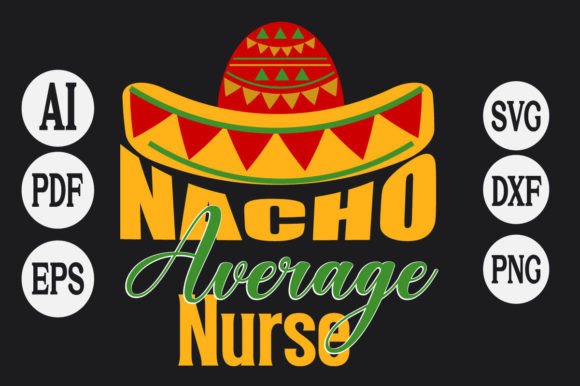
This design plays on a popular pun, combining nursing pride with a love for tacos. Visually, it relies heavily on typography with illustrative elements. My first impression was that the layout is balanced, but the success of this piece depends entirely on how you execute the stitch types. If you are an Etsy seller or run a craft business, you know that customers buy with their eyes but judge quality with their hands. A muddy stitch out can ruin the humor and the perceived value of a handmade product.
First Impressions and Visual Mood
The About Nacho Average Nurse SVG Design exudes a playful, lighthearted mood. It is perfect for breaking the sterility often associated with medical professions. The theme suggests fun, resilience, and a bit of cheekiness. For a personalized gift, this hits the right emotional note. However, from a technical standpoint, the "Nacho" element likely involves curved shapes and possibly small details that represent cheese or toppings. In a digital file, these look crisp. In embroidery, they can become lost if the stitch density is too high or if the thread colors do not contrast sufficiently against the background.
When I loaded the file into my editing software, I looked immediately at the node count and pathing. Typography-based designs are tricky because letters have thin strokes. If the original SVG uses very fine lines, converting them directly to satin stitch without widening them can lead to thread breaks or poor coverage. Conversely, making them too wide distorts the letter shape. This design needs careful attention to ensure the text remains legible after stitching.
Real-World Application: The Custom Sweatshirt Test
To test its viability, I imagined a real-life scenario: creating a custom sweatshirt embroidery piece for a nurse’s graduation or a team appreciation gift. Sweatshirts are forgiving due to their thickness, but they can be bulky in the hoop. I placed the design on a medium-weight cotton fleece. The result was promising, but only after adjustments.
For apparel like this, I recommend using a fill stitch for any larger graphic elements, such as the taco shell or background shapes, to provide solid coverage without excessive bulk. The text should remain satin or a narrow fill, depending on the font size. I found that the design worked best when centered on the chest or placed on the upper left sleeve for a subtle touch. It transforms a standard garment into a unique custom apparel item that stands out in a clinical setting where uniforms are often monotonous.
Beyond sweatshirts, this design could work well on a tote bag design. Canvas bags are sturdy and handle higher stitch counts well. Imagine a nurse carrying her scrubs and books in a bag featuring this witty phrase. It serves as both a functional item and a conversation starter. However, for a tote, you must ensure the backing is stable. A cut-away stabilizer is essential here to prevent the fabric from puckering under the weight of the threads.
Challenges with Small Hoops and Textured Fabrics
While the design is versatile, it is not without limitations. I would advise caution when attempting this on small hoop size projects, such as baby hats or small embroidered patch formats. If the text is scaled down too much, the individual letters may merge, rendering the pun unreadable. Embroidery lacks the infinite resolution of a printer. Tiny details in the "nacho" illustration might need to be simplified or removed entirely for smaller applications.
Textured fabrics also pose a challenge. If you are stitching on a waffle-knit towel or a ribbed knit cap, the uneven surface can cause the needle to skip or the thread to sink into the pile. In these cases, using a water-soluble topping is crucial to keep the stitches sitting on top of the fabric texture. Without it, the crisp edges of the typography will look fuzzy and unprofessional. This is a common mistake among new small shop product creators who do not account for material variance.
Commercial Viability and Brand Consistency
For those selling digital embroidery file products or finished goods, consistency is key. The About Nacho Average Nurse SVG Design fits well within a broader collection of healthcare-themed humor. It appeals to a specific niche, which can drive higher engagement on platforms like Etsy. Buyers looking for holiday embroidery gifts or end-of-year presents for colleagues often seek items that feel personal yet professional enough to wear in public.
However, remember that this is described as a printable typography design. As an embroiderer, you cannot simply plug an SVG into your machine. You must digitize it or convert it properly. If you are buying this as a design asset, ensure you have the rights to create derivative works. Many sellers offer SVGs for printing but require separate licenses for commercial embroidery sales. Always check the terms. If you are digitizing it yourself, pay attention to the underlay. Proper underlay stabilizes the fabric and anchors the top stitches, which is vital for wash durability.
Practical Designer Notes for Best Results
Before you commit to a final embroidery project, follow these practical steps:
- Test on Scrap Fabric: Never stitch directly on the final garment. Use a similar weight and weave to check for puckering.
- Check Thread Contrast: Ensure the thread colors stand out against the fabric. A yellow cheese detail on a white shirt may vanish; consider outlining it with a darker color.
- Review Stitch Density: High density causes stiffness and potential fabric distortion. Reduce density where possible, especially in overlapping areas.
- Inspect Small Details: Zoom in on the digital preview. Are there tiny isolated stitches? Remove them to prevent bird nesting.
- Use Proper Stabilizer: Match the stabilizer to the fabric. Cut-away for knits, tear-away for wovens.
- Confirm Licensing: Verify if the license allows for commercial use of the finished finished product if you plan to sell items.
In conclusion, the About Nacho Average Nurse SVG Design has strong potential for embroidery if treated with technical respect. It is not just a graphic; it is a blueprint that requires interpretation. By adjusting for fabric type, hoop size, and stitch structure, you can turn this playful concept into a high-quality commercial embroidery asset that delights customers and enhances your brand reputation. Whether for a baby embroidery onesie or a professional apron, the key lies in the execution, not just the image.